Maths
Intent
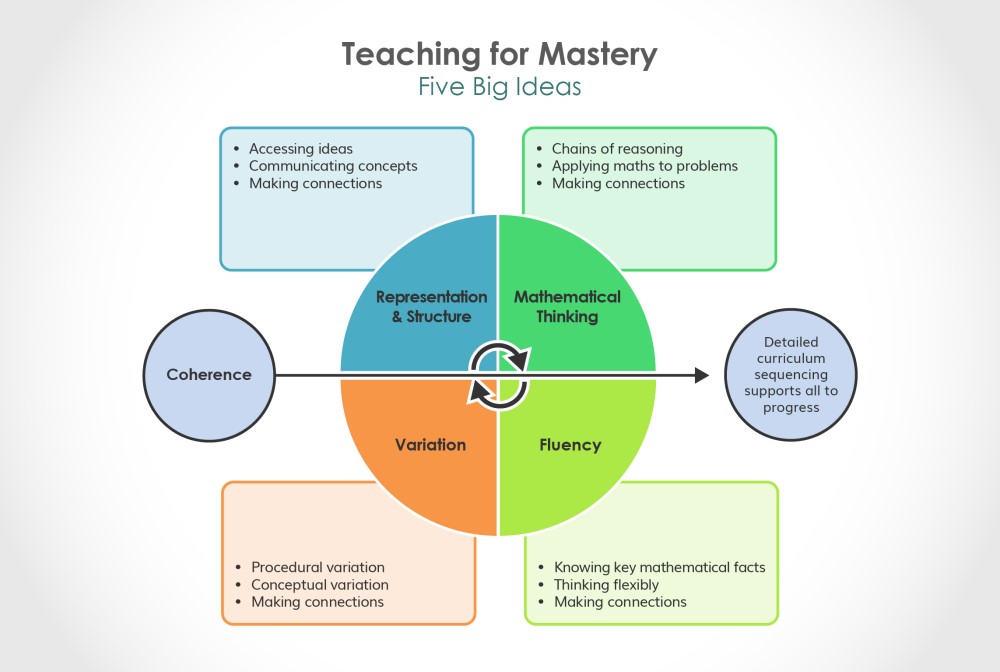
Mathematics is a core subject in the National Curriculum and at Hawley Primary School, our aim is for children to enjoy learning mathematics in a stimulating and collaborative environment. We strive for pupils to view mathematics as an interconnected web of ideas where they can articulate their thinking accurately, with confidence and make cross-domain links between new and prior learning. Through collaboration with our regional MathsHub, we deliver a Mastery approach to the curriculum where the underpinning principles include:
- assuming everyone can learn and enjoy mathematics
- making connections
- developing staff subject knowledge and refinement of teaching
- designing a coherent and detailed sequence of essential content
At Hawley, we want children to become life-long learners who can apply their mathematical understanding to the real world – developing learning behaviours such as flexible thinking and resilience in the face of unfamiliar problems.
Implementation
Our medium-term plan outlines the objectives in a year-by-year carefully sequenced series of small steps. All children begin the year focusing on Number & Place Value and progress to learning about the Four Operations throughout the Autumn term (+, -, x, ÷). These concepts are fundamental to long-term success in mathematics. To ensure ongoing fluency practise, the children in Years 1-6 complete daily Flashback Four questions to consolidate prior learning.
We believe children learn most effectively by being actively involved in the teaching and learning within the classroom. We endeavour to equip children with the skills to find the answers to their own mathematical questions and to further develop their curiosity about the world in which they live. As the children progress through the school, we seek to develop their ability to work independently and collaboratively, to listen, communicate and express their own views and in turn respect the views of others.
Although much of the mathematics is taught during a discreet maths lesson, we constantly seek to make meaningful cross-curricular links to embed maths into the bigger picture of each child’s learning, and to provide real life relevance to the concepts and skills that they are acquiring. This is a two–way process, so sometimes the Maths objectives may be taught as part of another topic, and at other times the topic objectives may be taught as part of the maths
Mathematical Talk
We are passionate about talk and mathematical dialogue; giving children time to question, reason and conjecture through regular MMMs (Morning Maths Meetings). This is where the children are posed with an unfamiliar problem or unfamiliar vocabulary. We explicitly teach the heuristics needed for problem solving and the aim of MMMs is to reduce feelings of maths anxiety and promote mathematical talk.
Equity in the Classroom
We use a variety of teaching and learning styles in the teaching of mathematics and adapt our techniques to support the needs of the pupils in our school. Each mathematics lesson aims to develop the children’s mathematical fluency, reasoning, and problem-solving skills. The children can use a wide range of resources including bead strings, number lines, numicon, place value counters, dienes (also known as base 10) and small apparatus to support their work. IT software is used in Mathematics lessons for modelling ideas and methods, complimented using Seesaw to promote independence and home-school links regarding the children’s learning.
“I loved the maths discussion you posted [to Seesaw], what a lovely respectful conversation between the children. You must be very proud of them and their enthusiasm and teamwork.” – KS2 Parent
SEND and Interventions
We recognise that strong number foundations are fundamental to long-term mathematical success. Therefore, we offer a range of interventions for children at any stage of their mathematical journey to ensure they are receiving the right stuff at the right time. Here is what this support could look like:
- Pre-Teaching (Sneaky Peek) – this is where learners are given a preview of the upcoming learning in class, enabling them to feel more confident and successful in the lesson.
- Arithmetic – offered to scaffold and support children’s learning of new and unfamiliar concepts most commonly involving Number, Place Value, the Four Operations and Fractions. These sessions mirror the structure used in lessons of ‘I do, we do, you do’.
- Nessy – a multisensory online program designed to develop early number sense and foundational maths skills.
Mental Fluency
We recognise the importance of establishing a secure foundation in mental calculation and the recall of number facts. We want our children to understand numbers and to use them efficiently and confidently. To support the rapid recall of basic number facts we subscribe to Times Table Rock Stars and have a Table Mountain reward scheme which begins in Year 2 once the concepts of multiplication and division have been sufficiently taught. In Year 4, pupils sit a Multiplication Check to assess their knowledge of times tables up to 12 x 12.
This continues right the way into Year 6. Pupils begin their journey up Table Mountain, aiming to beat the timer and earn stickers for their certificates. Once Table Mountain is conquered, children progress onto Mental Maths and Reasoning Rainbow in accordance with their year group. Please see the ‘Mental Fluency’ tab for further information.
EYFS and Mastering Number
In the Early Years Foundation Stage, Mastering Number forms the basis of our curriculum and as an NCETM-led program, is designed to build solid number sense, fluency and flexibility in children from Reception through to KS1. Children are explicitly taught about subitising, number composition and the relationships between numbers.
Our Early Years curriculum is enriched through Space, Shape and Measure planning. Through purposeful play, hands-on activities and real-life problem closing, children develop a strong understanding of early mathematical concepts. This is supported by the rich learning environment which sparks curiosity, promotes subject-specific language, and encourages confidence; setting learners up for their journey to come, whilst teaching them to explore the world around them in meaningful ways.
Parental Support
If you would like further support on how to best support your child with their maths learning, please see the ‘Top Tips for Supporting Your Child’ tab or contact your child’s class teacher.